
Best Yoga Poses After Shirshasana
Headstand, popularly known as Shirshasana, is often called the king of yoga poses because of its incredible impact on the body and mind. From improving blood circulation to enhancing focus and balance, this advanced inversion offers multiple health benefits. However, many yoga practitioners make one common mistake — they finish Shirshasana and immediately move on without following the proper counter poses.
Practicing the right yoga sequence after Shirshasana is extremely important. Since the body remains inverted during the pose, your spine, neck, blood flow, and nervous system need time to return to a balanced state. This is where calming and grounding yoga poses help.
In this Article by Yoga Makes Healthy, you’ll learn the best yoga poses to practice after Shirshasana, their benefits, and important precautions to avoid strain or dizziness.
Why Is It Important to Do Counter Poses After Shirshasana?
Shirshasana reverses the normal flow of gravity in the body. While this improves circulation and energizes the brain, it also places pressure on the neck, shoulders, and upper body.
Counter poses help to:
- Relax the neck and spine
- Normalize blood circulation
- Reduce pressure on the head and shoulders
- Calm the nervous system
- Prevent dizziness and fatigue
- Balance the body after inversion
Skipping recovery poses after a headstand may lead to stiffness, headaches, or discomfort, especially for beginners.
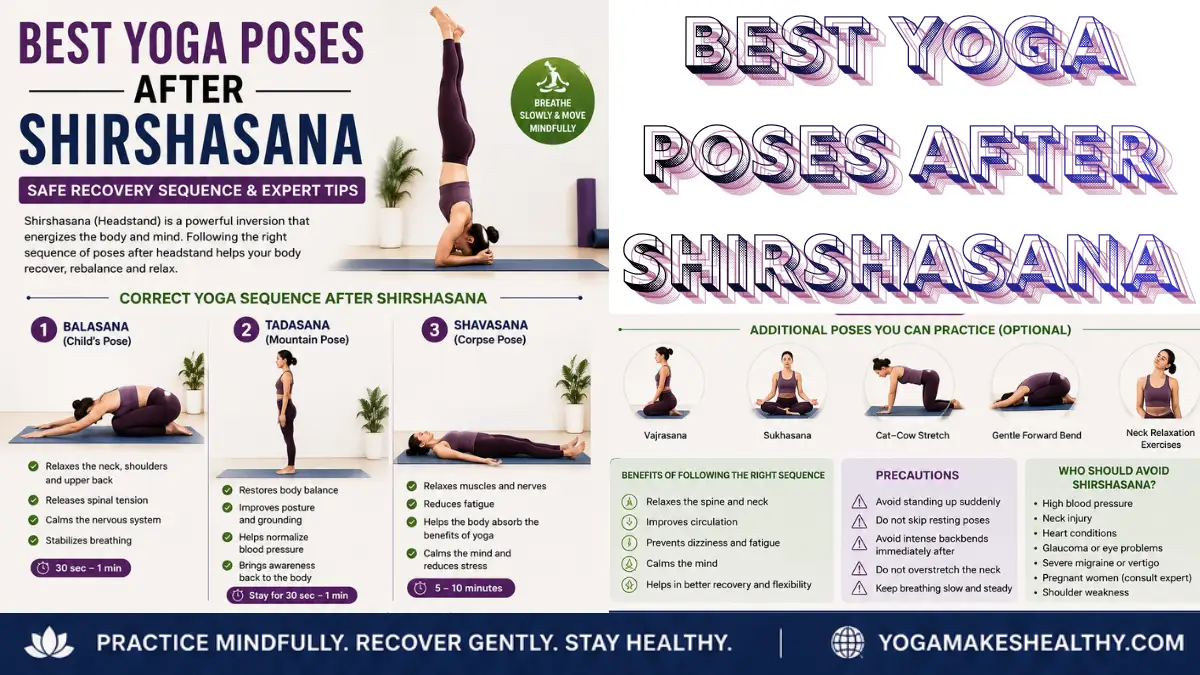
Correct Yoga Sequence After Shirshasana
Following a proper order helps the body gradually return to its normal posture. Here’s the ideal sequence yoga experts recommend:
1. Child’s Pose (Balasana)
Immediately after coming down from Shirshasana, rest in Balasana for a few deep breaths.
Benefits:
- Relaxes the neck and shoulders
- Releases spinal tension
- Calms the nervous system
- Helps stabilize breathing
How Long?
Stay in Balasana for 30 seconds to 1 minute.
After resting, slowly stand up and practice Tadasana.
Benefits:
- Restores body balance
- Improves posture and grounding
- Helps normalize blood pressure
- Brings awareness back to the body
Pro Tip:
Avoid standing up too quickly after a headstand to prevent dizziness.

Finish your sequence with Shavasana to completely relax the body.
Benefits:
- Relaxes muscles and nerves
- Reduces fatigue
- Helps the body absorb yoga benefits
- Calms the mind and reduces stress
Ideal Duration:
Practice Shavasana for 5–10 minutes.
Additional Yoga Poses You Can Practice After Shirshasana
Depending on your comfort level, you may also include:
- Vajrasana
- Sukhasana
- Cat-Cow Stretch
- Gentle Forward Bend
- Neck Relaxation Exercises
These poses help release residual tension from the upper body.
Common Mistakes to Avoid After Shirshasana
Many people unknowingly strain their body after a headstand. Avoid these mistakes:
- Standing up suddenly
- Skipping resting poses
- Overstretching the neck immediately
- Practicing intense backbends right after inversion
- Holding your breath
A smooth transition is key to safe yoga practice.
Who Should Avoid Shirshasana?
Although highly beneficial, Shirshasana is not suitable for everyone.
Avoid or practice only under expert guidance if you have:
- High blood pressure
- Neck injury
- Heart conditions
- Glaucoma or eye pressure issues
- Severe migraine
- Shoulder weakness
- Vertigo
Pregnant women and beginners should consult a certified yoga instructor before attempting advanced inversions.
Expert Tips for Safe Headstand Practice
- Always warm up before Shirshasana
- Use a yoga mat or soft surface
- Engage your core muscles
- Never rush into or out of the pose
- Practice near a wall if you are a beginner
- Focus on slow breathing throughout the session
Consistency and proper alignment matter more than duration.
#Shirshasana #HeadstandYoga #YogaTips #YogaPractice #YogaRoutine #HealthyLifestyle #DailyYoga #Wellness #StressRelief #YogaForBeginners #MindBodySoul #FitnessIndia #YogaBenefits #HolisticHealth #Meditation #Balasana #Shavasana #Tadasana #FitnessMotivation #YogaLife
Final Thoughts
Shirshasana can be transformative for both physical and mental health when practiced correctly. But the real secret lies in what you do after the pose. Gentle counter poses like Balasana, Tadasana, and Shavasana help your body recover, rebalance, and fully absorb the benefits of inversion yoga.
A mindful yoga sequence not only prevents injuries but also improves flexibility, relaxation, and overall well-being. Whether you are a beginner or an experienced yoga practitioner, never skip the recovery phase after Shirshasana.
For more yoga guides, wellness tips, and healthy living insights, visit Yoga Makes Healthy.
International Mind and Body Wellness Day 2025: Simple Practices for Holistic Health
The Significance of Sukun in Human Life: Cultivating Inner Peace
Time Management Tools: Increase Your Productivity and Stay Organized