
9 Kumbhaka Pranayama Techniques
9 Kumbhaka Pranayama Techniques : Yoga is not only about physical postures—it is also about mastering the breath. In traditional yogic science, Kumbhaka refers to the practice of breath retention in pranayama, which plays a key role in controlling energy (prana) within the body.
Ancient yoga texts like the Hatha Ratnavali describe several powerful breathing techniques that help strengthen the lungs, calm the mind, and improve overall vitality. Among these, nine specific kumbhaka pranayama techniques are widely known for their transformative effects on both physical and mental health.
If practiced correctly and consistently, these breathing practices can enhance oxygen flow, balance the nervous system, and deepen meditation.
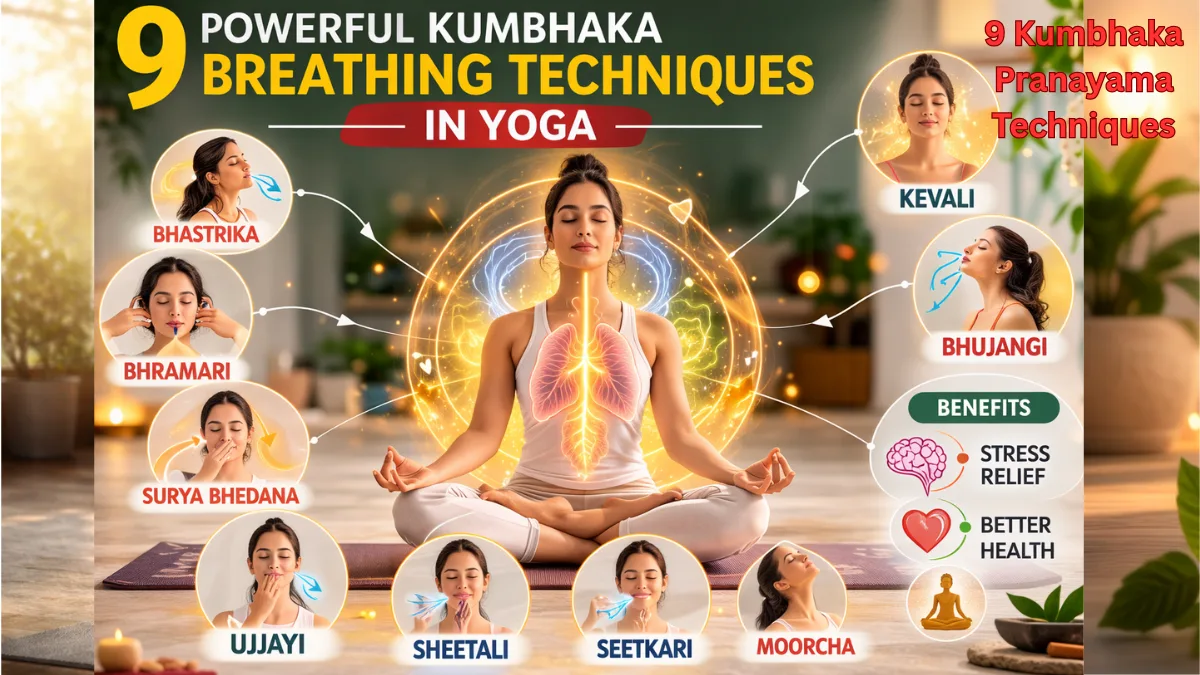
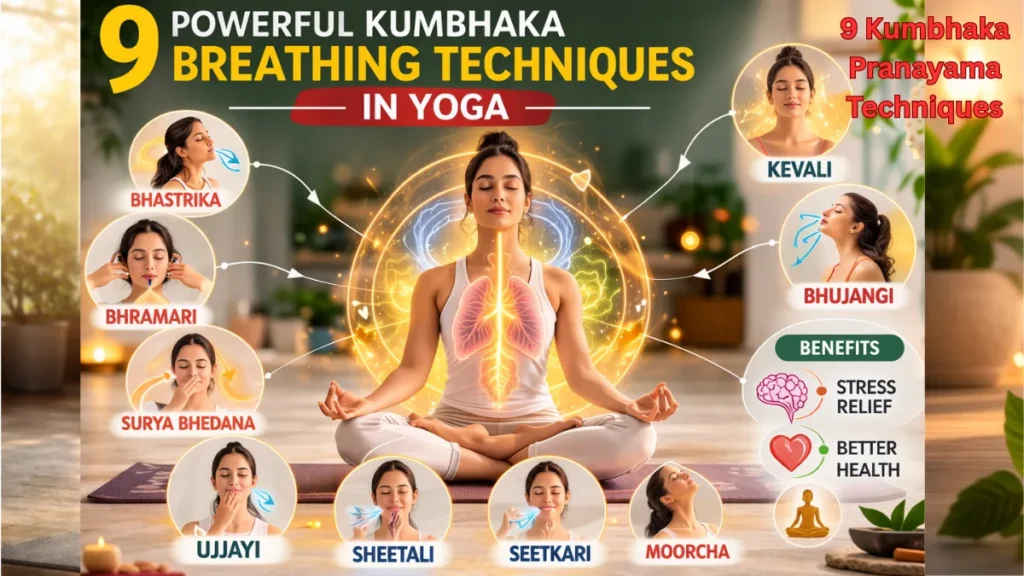
9 Powerful Kumbhaka Breathing Techniques in Yoga
1. Bhastrika Pranayama (Bellows Breath)Kumbhaka
Bhastrika pranayama is an energizing Kumbhaka breathing technique where inhalation and exhalation are performed forcefully and rhythmically.
This practice stimulates the respiratory system and increases oxygen supply throughout the body.
Benefits
- Improves lung capacity
- Boosts metabolism and energy
- Clears nasal passages and sinuses
- Enhances mental alertness
Regular practice of Bhastrika can make the body feel refreshed and energized.
2. Bhramari Pranayama (Humming Bee Breath)
Bhramari pranayama involves producing a gentle humming sound while exhaling, similar to the buzzing of a bee.
The vibration created by the sound helps calm the nervous system and reduce mental tension.
Benefits
- Reduces anxiety and stress
- Improves concentration
- Promotes emotional balance
- Supports better sleep
This breathing technique is often recommended for people dealing with stress or overthinking.
3. Surya Bhedana Pranayama (Right Nostril Breathing)
Surya Bhedana involves inhaling through the right nostril and exhaling through the left nostril.
According to yogic philosophy, the right nostril activates the solar energy channel (Pingala Nadi), which stimulates the body.
Benefits
- Improves digestion
- Increases body heat and metabolism
- Enhances energy levels
- Helps overcome sluggishness
It is particularly helpful during colder seasons or when the body feels low on energy.
4. Ujjayi Pranayama (Victorious Breath)
Ujjayi breathing is performed by slightly constricting the throat while inhaling and exhaling through the nose, creating a soft ocean-like sound.
This technique is widely used in many yoga practices.
Benefits
- Improves oxygen circulation
- Calms the nervous system
- Supports meditation
- Enhances endurance during yoga practice
The rhythmic sound of the breath helps the mind stay focused and relaxed.
5. Sheetali Pranayama (Cooling Breath)
Sheetali pranayama is known for its cooling effect on the body. The practitioner inhales through a rolled tongue and exhales through the nose.
This technique helps regulate body temperature and calm the mind.
Benefits
- Reduces body heat
- Helps manage stress and anger
- Supports hydration balance
- Improves digestion
It is especially beneficial during hot weather or after intense physical activity.
6. Moorcha Pranayama
Moorcha pranayama is a more advanced breathing technique involving breath retention combined with a subtle lifting of the head.
This practice creates a feeling of mental stillness and deep relaxation.
Benefits
- Promotes inner calm
- Enhances meditative awareness
- Reduces mental restlessness
- Improves emotional stability
Due to its advanced nature, it should be practiced under proper guidance.
7. Seetkari Pranayama
Seetkari pranayama is another cooling breathing technique similar to Sheetali. The practitioner inhales through clenched teeth while producing a soft hissing sound.
Benefits
- Cools the body and mind
- Helps control hunger and thirst
- Improves relaxation
- Supports mental clarity
It is often practiced during summer months.
8. Kevali Kumbhaka
Kevali Kumbhaka represents a deeper stage of breath control where breathing becomes subtle and almost effortless.
In advanced yoga practice, the breath naturally pauses without strain.
Benefits
- Enhances meditation
- Balances prana in the body
- Promotes mental stillness
- Supports spiritual awareness
This technique is typically achieved after consistent pranayama practice.
9. Bhujangi Pranayama
Bhujangi pranayama involves controlled breathing combined with subtle throat engagement. It resembles the breathing pattern of a cobra.
Benefits
- Improves lung efficiency
- Supports respiratory health
- Strengthens breathing muscles
- Encourages calm breathing patterns
It can be helpful for people who want to improve their breathing awareness.
Ancient Yoga Reveals 9 Kumbhaka Breathing Techniques for Lung Power
Why Kumbhaka Breathing Is Important in Yoga
Kumbhaka pranayama is considered a bridge between physical yoga practice and meditation. By holding the breath in a controlled way, practitioners learn to regulate the flow of prana and stabilize the mind.
Some key benefits include:
- Increased lung capacity
- Improved oxygen utilization
- Reduced stress levels
- Enhanced focus and mental clarity
- Balanced nervous system
Over time, these practices help cultivate deeper awareness and inner balance.
Tips for Practicing Kumbhaka Safely
To gain the maximum benefit from pranayama, it is important to follow some basic guidelines:
- Practice on an empty stomach
- Sit in a comfortable meditative posture
- Start with slow and gentle breathing
- Avoid forcing breath retention
- Practice under guidance if you are a beginner
Consistency is more important than intensity when it comes to pranayama practice.
9 Kumbhaka Pranayama Techniques
The nine kumbhaka breathing techniques described in traditional yoga texts offer powerful tools for improving both physical and mental health. Whether you want to increase lung strength, reduce stress, or deepen meditation, these pranayama practices can support your journey toward better well-being.
With regular practice and mindful breathing, the ancient wisdom of yoga continues to provide simple yet powerful methods for living a healthier and more balanced life.
For more yoga guides and wellness insights, visit https://yogamakeshealthy.com/.
External Links
Kumbhaka Breathing Explained – Yogapedia
Bhastrika Pranayama Breathing Technique and Benefits
Bhramari Pranayama (Humming Bee Breath) Guide
Ujjayi Breath: How to Practice Victorious Breath
Scientific Research on Benefits of Pranayama Breathing
Breathing Exercises for Better Lung Health
What is Pranayama? Yoga Breathing Techniques Explained
Pranayama: Ancient Yoga Breathing Techniques
#Pranayama, #Kumbhaka, #YogaBreathing, #YogaForHealth, #HathaYoga, #BreathingTechniques, #BhastrikaPranayama, #BhramariPranayama, #UjjayiBreath, #SheetaliPranayama, #SeetkariPranayama, #YogaPractice, #YogaDaily, #MindBodyBalance, #HealthyBreathing