
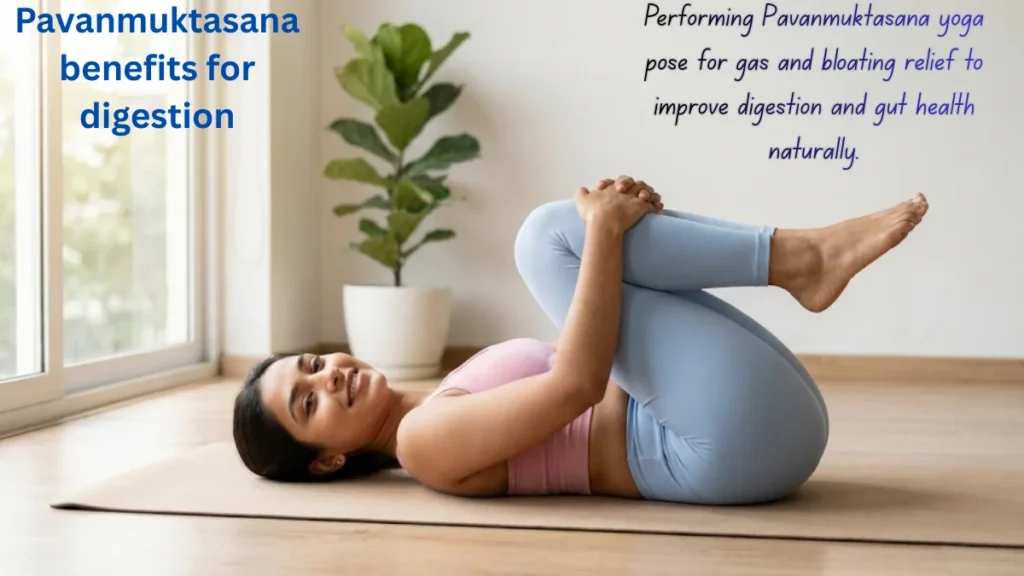
Pavanmuktasana for digestion and bloating relief
Pavanmuktasana (Wind-Relieving Pose) is a powerful 5-minute yoga practice that improves digestion, relieves bloating, reduces gas, and supports gut health naturally. Learn step-by-step benefits, variations, and expert tips.
Digestive discomfort has become one of the most common health complaints today. From acidity and bloating to constipation and sluggish metabolism, poor gut health affects millions of people — often due to stress, sedentary lifestyles, irregular eating patterns, and processed foods.
Pavanmuktasana (Wind-Relieving Pose) is a powerful yoga asana that helps eliminate stomach disorders, improves digestion, reduces bloating, and supports gut health naturally. Discover its benefits, steps, and expert tips.
Let’s explore its science-backed benefits, correct technique, variations, and why it deserves a place in your daily routine.
What is Pavanmuktasana?
“Pavan” means wind, “Mukta” means release, and “Asana” means posture. The pose is specifically designed to help release trapped intestinal gas while improving digestive efficiency.
It belongs to a series of yoga movements traditionally practiced to improve joint mobility and internal organ function. Because it involves compressing the abdomen, it activates:
- The stomach
- Small and large intestines
- Liver
- Pancreas
This makes it particularly beneficial for people dealing with gas, indigestion, and irregular bowel movements.
How Pavanmuktasana Improves Digestion (The Science Behind It)
When you bring your knees toward your chest, the abdominal cavity experiences gentle compression. This creates:
- Improved blood circulation to digestive organs
- Stimulation of peristalsis (natural intestinal movement)
- Enhanced enzyme secretion
- Release of trapped gas pockets
This mechanical stimulation improves gut motility, which is essential for preventing constipation and bloating.
Additionally, the controlled breathing used during the pose activates the parasympathetic nervous system — often called the “rest and digest” mode — reducing stress-related digestive issues.
10 Powerful Benefits of Pavanmuktasana
1. Relieves Gas Instantly
The pose is especially effective in expelling trapped intestinal gas.
2. Reduces Bloating and Abdominal Heaviness
Regular practice prevents excessive gas formation.
3. Improves Constipation
Stimulates bowel movement and colon function.
4. Enhances Digestive Efficiency
Supports better breakdown and absorption of nutrients.
5. Reduces Acidity
Promotes smoother digestion, lowering acid reflux symptoms.
6. Strengthens Core Muscles
Engages abdominal muscles and tones the lower belly.
7. Supports Lower Back Relief
Gently stretches lumbar muscles, easing stiffness.
8. Improves Hip Flexibility
Mobilizes hip joints and reduces tightness.
9. Boosts Metabolism
Better digestion naturally enhances metabolic function.
10. Promotes Relaxation
Deep breathing reduces stress, which is a major trigger for digestive problems.
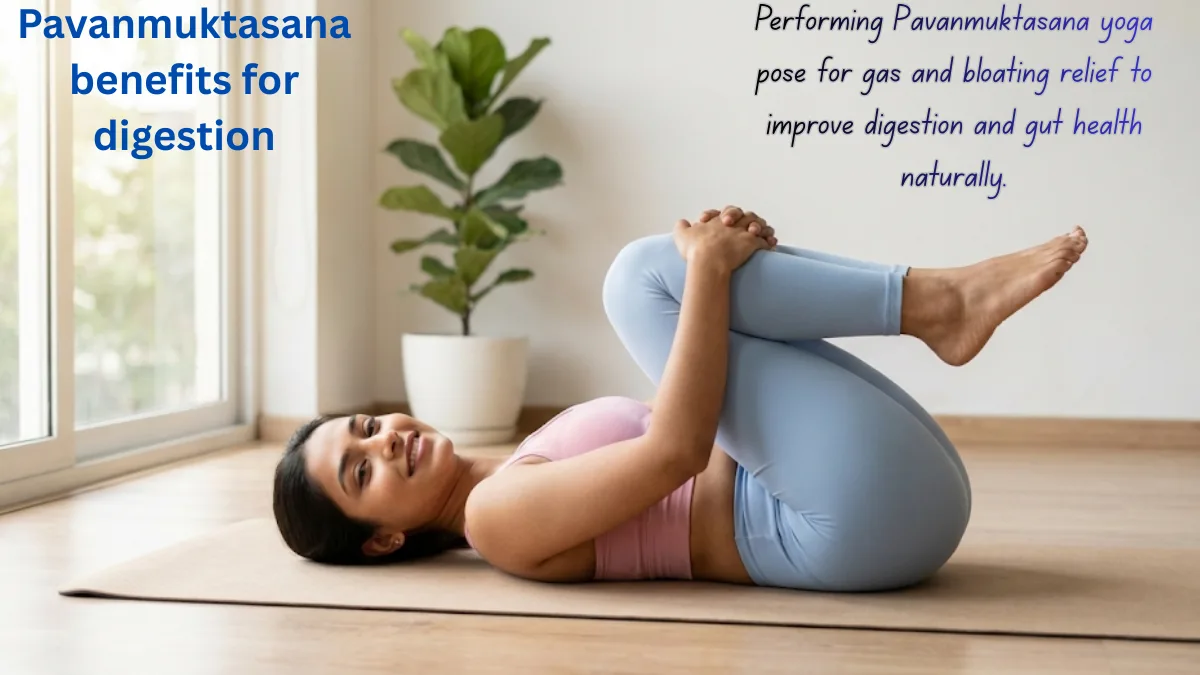
Step-by-Step Guide to Perform Pavanmuktasana Correctly
- Lie flat on your back on a yoga mat.
- Keep legs extended and arms beside your body.
- Inhale deeply.
- Exhale slowly while bending both knees toward your chest.
- Wrap your arms around your knees.
- Interlock fingers just below your knees.
- Optionally lift your head and bring your chin toward your knees.
- Hold for 20–40 seconds while breathing normally.
- Slowly release and relax.
Repeat 3–5 times.
Beginner Variation
If lifting both legs feels difficult:
- Practice with one leg at a time.
- Keep the head resting on the floor.
This reduces strain while still providing digestive benefits.
Advanced Variation
- Rock gently forward and backward while holding the knees.
- This massages the spine and further stimulates abdominal organs.
Best Time to Practice
- Early morning on an empty stomach
- Or at least 4–5 hours after meals
- Can also be practiced before bedtime for relieving gas discomfort
Who Should Avoid or Modify This Pose?
- Pregnant women
- People with hernia
- Severe spinal injury patients
- Recent abdominal surgery cases
Consult a healthcare professional if you have chronic digestive disorders.
How Often Should You Practice Pavanmuktasana?
For noticeable results:
- Practice daily for 2–4 weeks
- Combine with other digestive yoga poses like gentle twists
- Maintain proper hydration and balanced diet
Consistency is key.
Why Pavanmuktasana is Crucial in Today’s Sedentary Lifestyle
Prolonged sitting compresses abdominal organs and slows digestion. Lack of movement reduces intestinal activity, leading to gas accumulation and constipation.
Pavanmuktasana reverses this effect by:
- Activating stagnant digestive organs
- Improving circulation
- Releasing abdominal tension
It takes less than 5 minutes but can significantly improve daily comfort.
Expert Wellness Insight
Yoga philosophy emphasizes that a healthy gut is the foundation of overall health. Modern research also links gut health to:
- Immunity
- Mental clarity
- Hormonal balance
- Energy levels
By improving digestion naturally, Pavanmuktasana supports total-body wellness.
Pavanmuktasana
In a world chasing quick solutions, ancient yoga continues to offer sustainable answers.
Pavanmuktasana is not just a posture — it’s a daily reset for your digestive system. Simple, accessible, and deeply effective, this pose can transform the way your body feels from the inside out.
If bloating, gas, or sluggish digestion are affecting your quality of life, adding this pose to your routine could be the natural solution you’ve been looking for.
For more science-backed yoga insights and holistic wellness guidance, stay connected with YogaMakesHealthy.com.
#Pavanmuktasana #YogaForDigestion #BloatingRelief #GasRelief #ConstipationRelief #GutHealth #YogaDaily #NaturalHealing #HealthyGut #MorningYogaRoutine #HolisticHealth #YogaBenefits #WellnessJourney #DigestiveHealth #YogaMakesHealthy